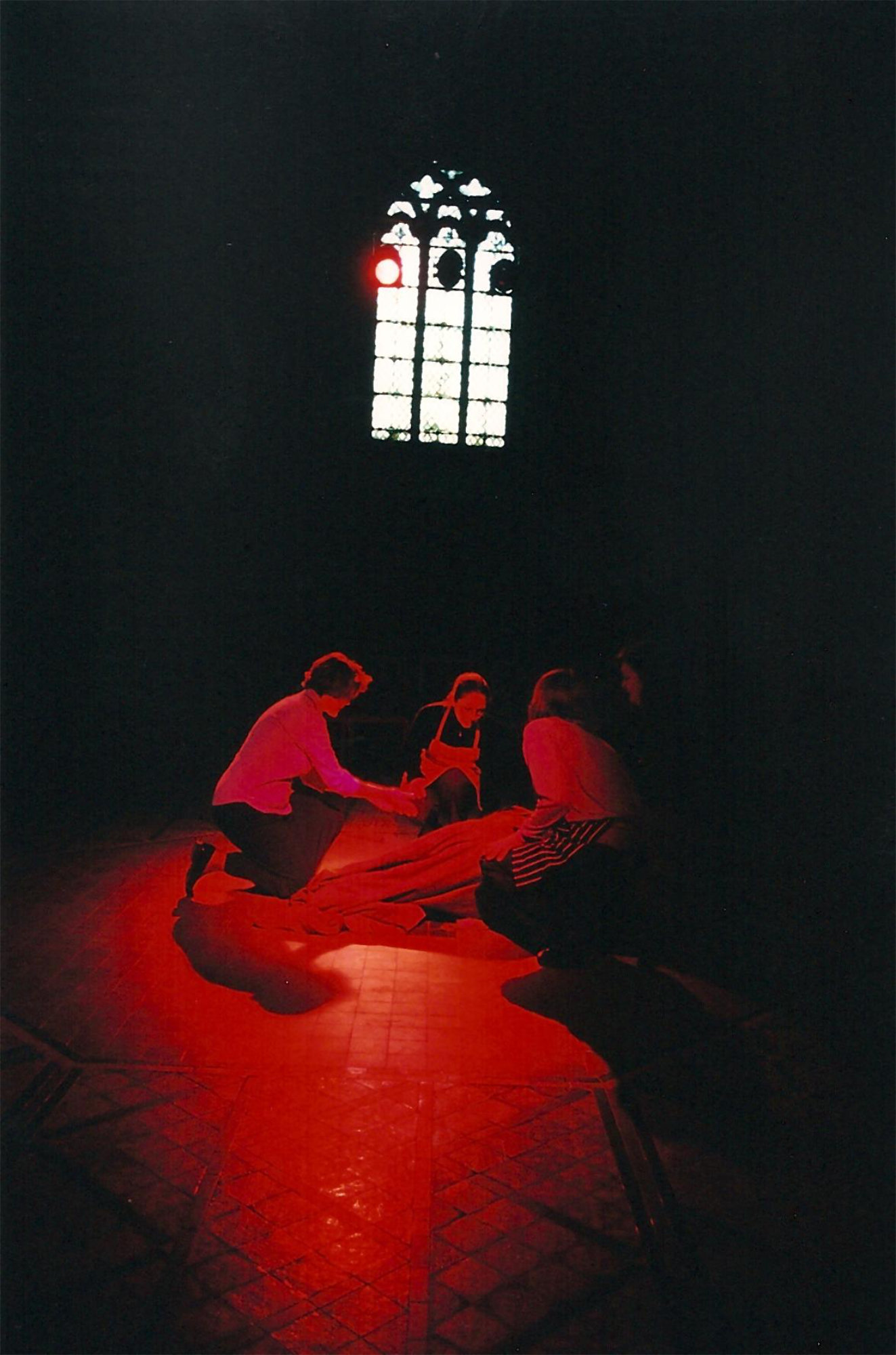
MURDER IN THE CATHEDRAL
by T.S. Eliot
by T.S. Eliot
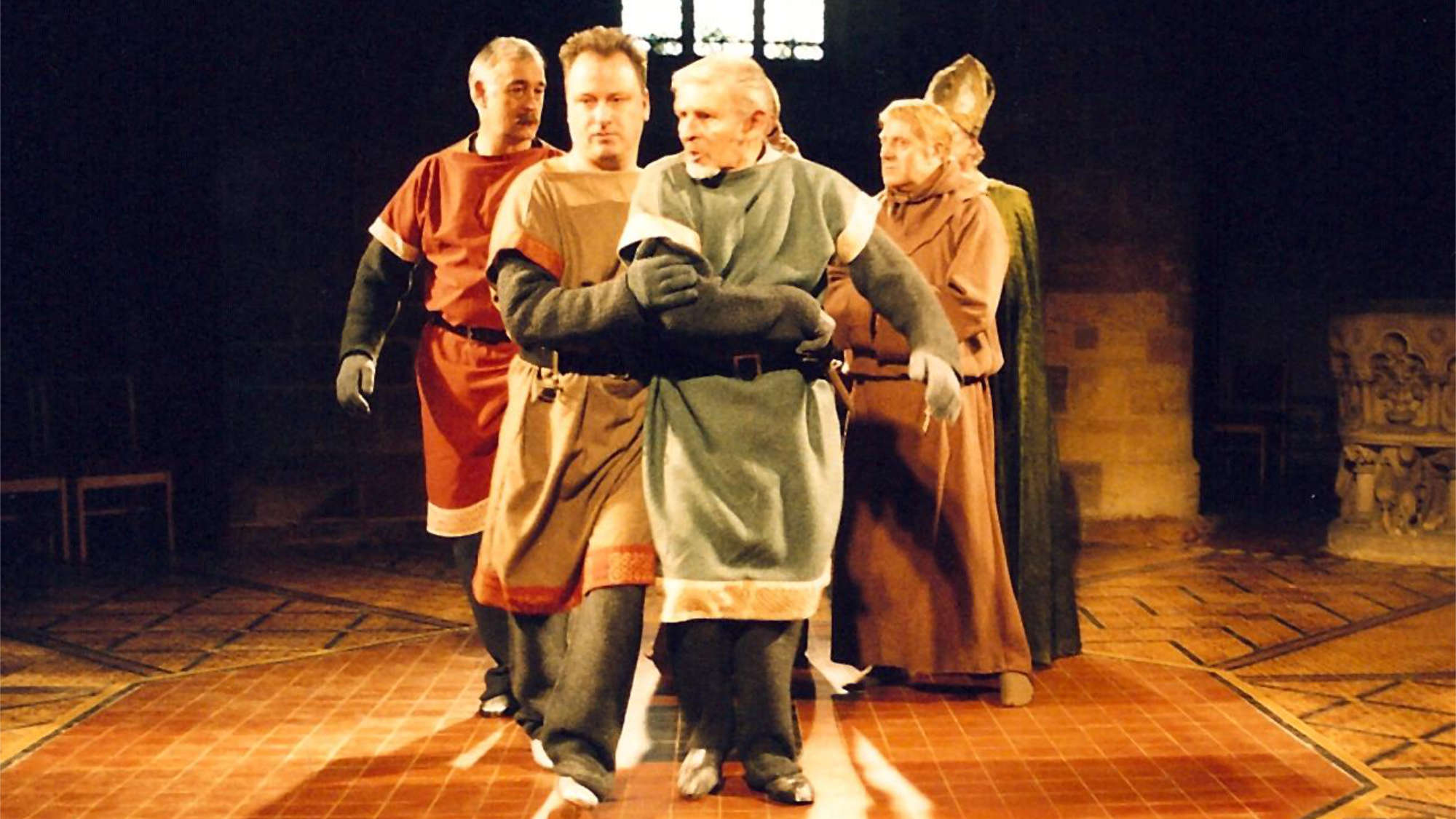
Tue 3 - Sat 7 December 2002 at 7.30pm
The Church of the Holy Sepulchre, Sheep Street, Northampton
Photo gallery

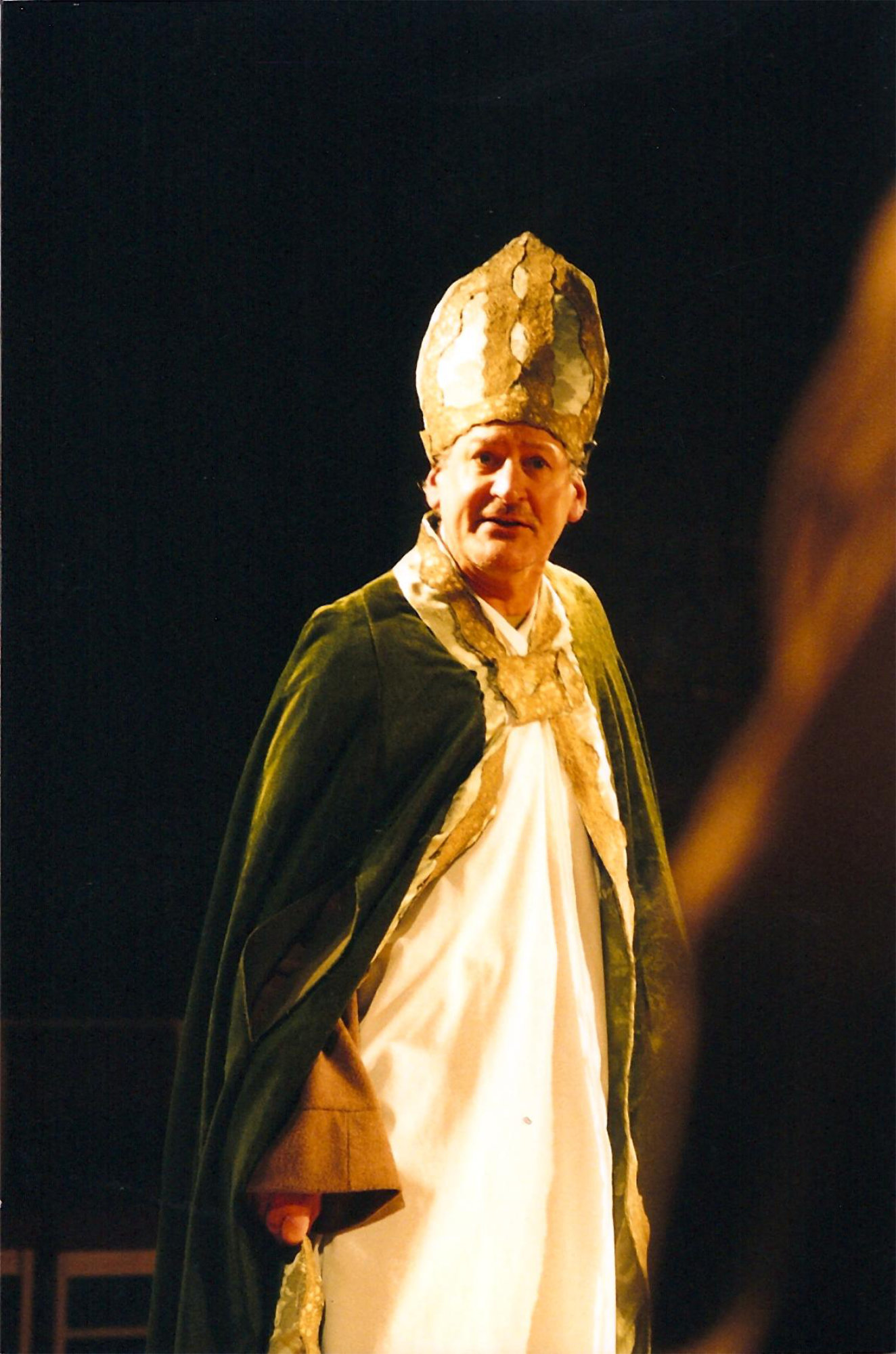
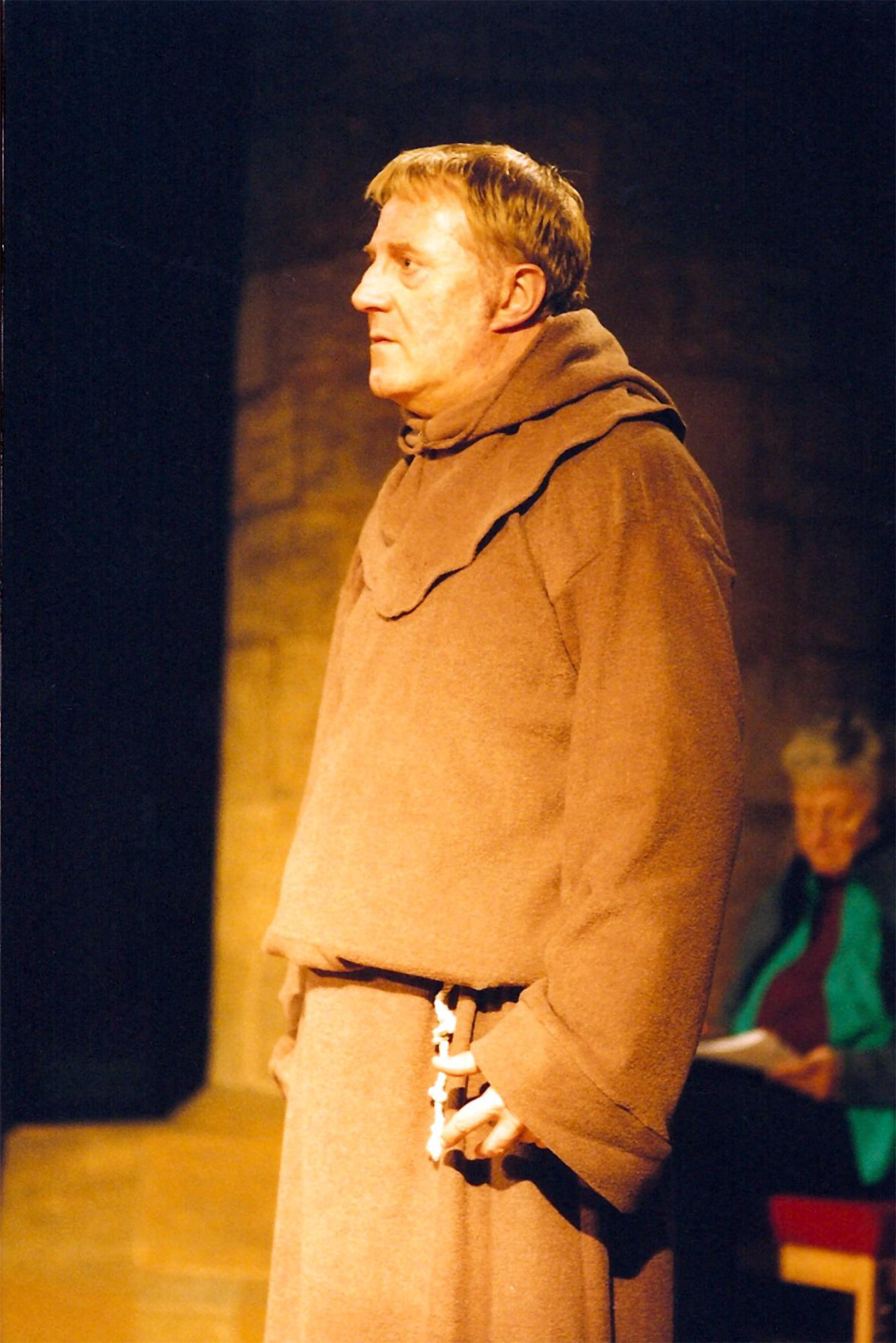
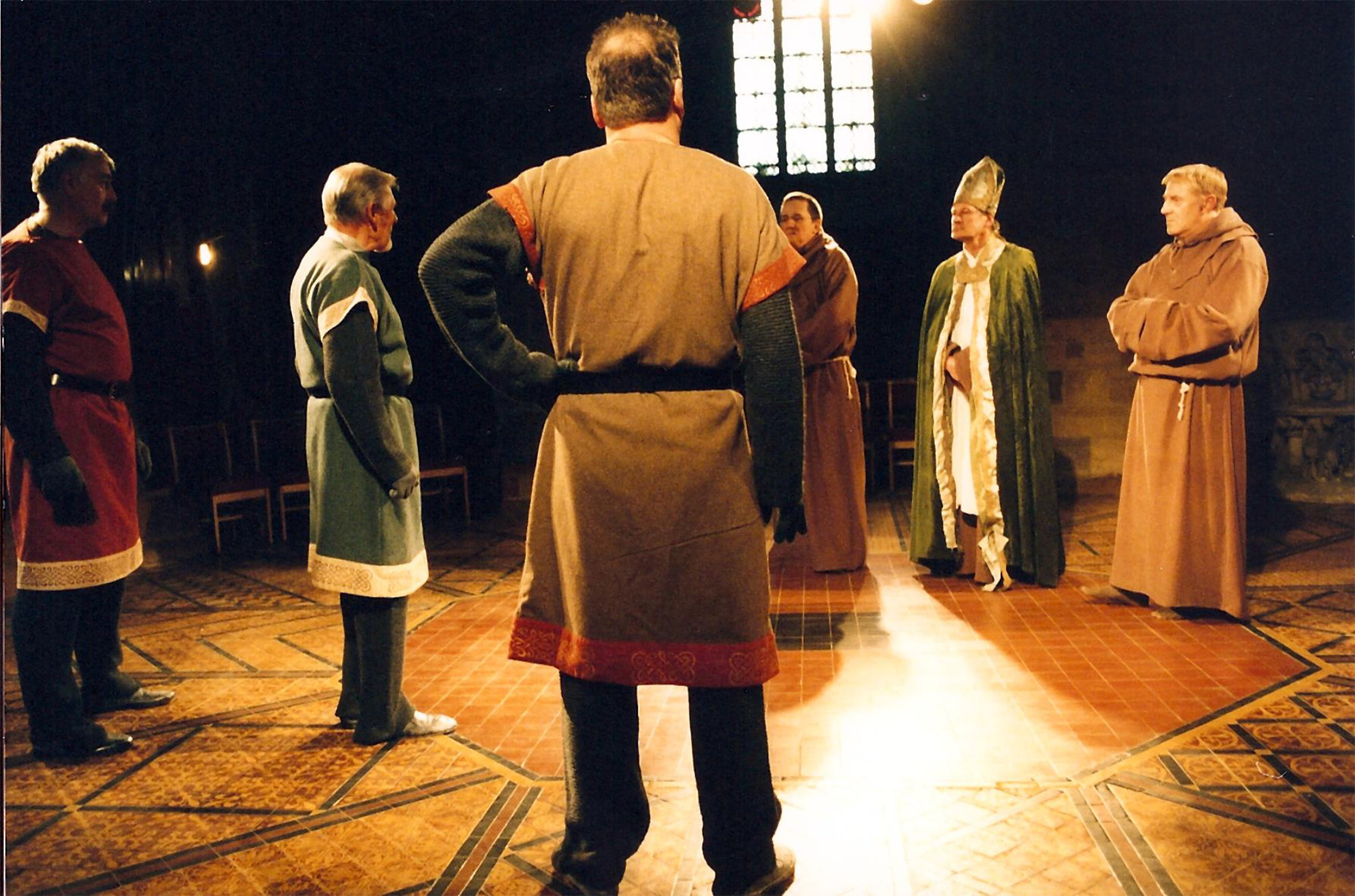



Thomas Becket was born in Rouen in 1118 and was martyred on December 29th 1170 — you might say the rest is speculation.
Certainly most that was written about him in the 12th Century tended to be rather partisan echoing the views of either the King’s camp or Becket’s.
King Henry II had certainly referred to him as 'our traitor'.
As Chancellor, Becket’s entourage outshone Henry’s and even in exile he was surrounded by some hundreds of servants.
He was also quick to rebut any suggestions that he was of lowly birth. Or that he owed his advancement solely to royal favour.
His pride was linked to considerable physical courage, on the battlefield, in his confrontation with the four Knights who came to murder him, and elsewhere.
Yet he was also a man of humility and charity. He doubled the alms given by his predecessor and attended personally to the needs of beggars who came to his door.
Northampton Castle
In Northampton, Becket’s name is associated with the fact that he was tried at Northampton Castle for financial irregularities when he had been Chancellor.
Probably staying at St Andrew's Priory (near the site of Holy Sepulchre) and escaping into exile before the trial was concluded.
Henry was trying to make him agree with the other Bishops that the King’s court had jurisdiction over the clergy. He failed in this, and also Henry’s anger was brought to the boil when later Becket had the Bishops excommunicated who had presided over the coronation of Henry’s son rather than himself.
Becket came back to Canterbury alter seven years exile but was quickly followed by the four knights, Hugh de Moreville, Reginald FitzeUrse, William de Tracy and Richard le Brito.
Robert De Broc, who had recently been excommunicated by Becket, let the knights into the cathedral together with Hugh of Horsea.
ln the struggle that followed a young priest, Edward Grim, had his arm severed by one of the sword blows.
As the struggle became more ferocious, the priests ran off at FitzeUrse’s command 'Ferez' to strike and le Breton severed the crown of Becket’s head as he lay on the ground.
As the knights prepared to leave, Horsea stepped forward and dug his sword into the skull of Becket and turned his brains out on the flagstones.
The outcry against Henry was universal and the cathedral was closed for a year.
ln 1172 Henry atoned for his share of the guilt.
Becket had won over Henry in his death but within four years King’s law ruled, but equally Becket had become a saint and martyr.
This production is directed by Rob Kendall. He has also directed: A View From The Bridge (2002), Entertaining Mr Sloane (2000), East (1998), A Streetcar Named Desire (1997) and Antony and Cleopatra (1996)